
How to Choose the Best Time Frame for Day Trading (Without Overthinking It)
If you’ve ever opened a trading chart and thought, “Why does this look completely different on every time frame?”—you’re not alone. Choosing the right time frame for day trading is one of the most overlooked (and misunderstood) parts of becoming a consistently profitable trader.
Here’s the good news: you don’t need to use every time frame, and you definitely don’t need to complicate it. In this guide, I’ll walk you through how to choose the best time frame for day trading based on your personality, strategy, and goals, not some one-size-fits-all rule.
By the end, you’ll know exactly which time frames to focus on—and which ones to ignore.
Why the Right Time Frame for Day Trading Actually Matters
Let’s get this out of the way: the time frame for day trading you choose directly affects your entries, exits, stress level, and even your confidence.
Different time frames tell different stories:
Shorter time frames show noise and emotion
Higher time frames reveal structure and direction
If you pick the wrong one, you might:
Enter too early
Exit too late
Overtrade
Or freeze up from conflicting signals (paralysis by analysis)
That’s why professional day traders use multiple time frames, each with a specific purpose.
👉 Related read: Day Trading Strategies Th
The Most Common Time Frames Used in Day Trading
Before we choose the best time frame for day trading, let’s break down the most popular ones and what they’re good for.
1-Minute Chart
Best for: Scalpers
Pros: Fast entries, quick profits
Cons: Extremely noisy and stressful
5-Minute Chart
Best for: Most day traders
Pros: Balanced view of price action
Cons: Still requires discipline and patience
15-Minute Chart
Best for: Trend-based day traders
Pros: Cleaner setups, fewer false signals
Cons: Fewer trades per session
30-Minute & 1-Hour Charts
Best for: Direction and bias
Pros: Strong structure and key levels
Cons: Not ideal for precise entries
Most traders fail because they try to trade everything instead of assigning each time frame a role.
The Best Time Frame for Day Trading (According to Your Trading Style)
There is no universal “best” time frame for day trading—but there is a best one for you.
1. Bias Time Frame = “What side do I want to be on today?”
Big picture direction. Context. The wind at your back.
This is the highest timeframe in your stack.
What you use it for:
Overall trend (up, down, range)
Key support/resistance
Where price is relative to VWAP, 9/20 EMA, previous highs/lows
Whether you should prefer longs or shorts
What you are NOT doing here:
Taking entries
Micromanaging candles
📌 Example:
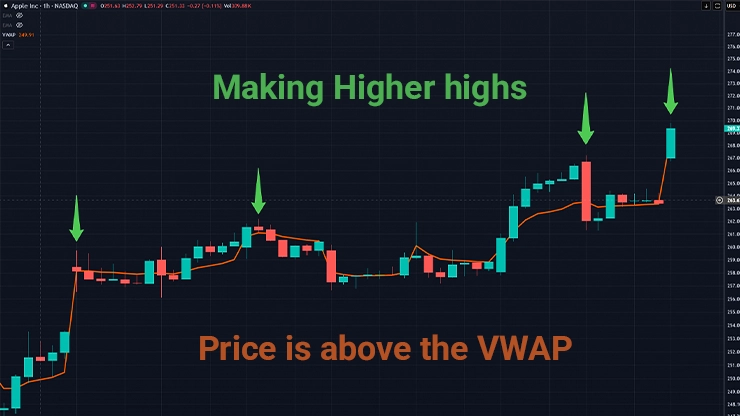
On the 1-hour, price is above VWAP and making higher highs → bullish bias.
That means during the day, you favor longs and are extra picky with shorts.
2. Primary Time Frame = “Where do I actually pull the trigger?”
This is your execution chart.
This is where:
Your setups live
Your entries and exits happen
Your risk is defined
You spend most of your time here.
What you’re looking for:
Your specific strategy (pullbacks, breakouts, flag breaks, etc.)
Clean candles and structure
Entry triggers
📌 Example:
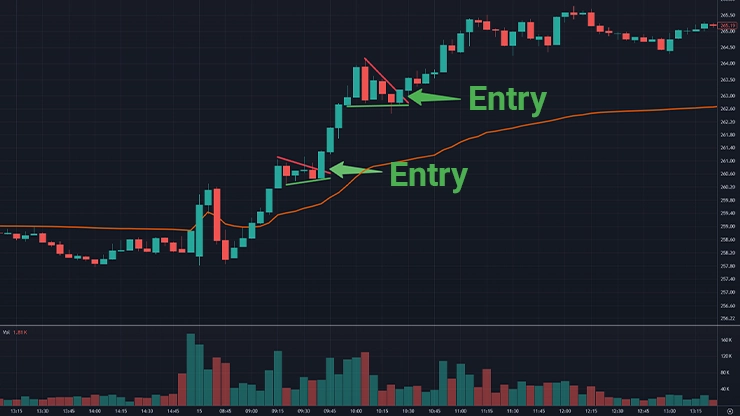
You’re a momentum trader → 5-minute chart
You see a bull flag forming after a strong push → this is where you enter.
3. Confirmation Time Frame = “Is this move legit or am I about to get faked out?”
The lie detector.
This timeframe sits between bias and primary (or slightly above/below depending on style).
What you use it for:
Confirm trend strength
See if levels line up across timeframes
Avoid taking trades against higher-TF structure
What it helps prevent:
Trading into major resistance
Chasing weak moves
Getting chopped in noise
📌 Example:
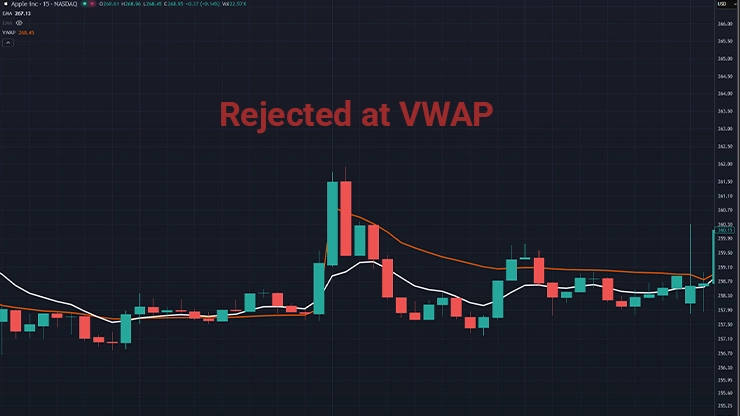
You want to go long on the 5-minute,
but the 15-minute is rejecting VWAP hard → that’s a warning sign.
How They Work Together (Quick Mental Model)
🧭 Bias → Direction
🎯 Primary → Execution
🧪 Confirmation → Validation
You want alignment, not perfection.
Style-Specific Breakdown (With Intuition)
🔥 Scalper
Bias (15m): Is this a long or short environment?
Primary (1–2m): Fast entries, quick exits
Confirmation (5m): Avoid scalping into a higher-TF wall
Why it works:
Lower timeframes are noisy—confirmation keeps you from trading random ticks.
👉 Related read: Timeframe Wall: What is it, and why it stops your trades from working.
⚡ Momentum Day Trader
Bias (1h): Are we trending or ranging today?
Primary (5m): Clean momentum setups
Confirmation (15m): Confirms trend health and continuation
Why it works:
Momentum dies fast—this stack helps you enter early but not blind.
🌊 Trend Day Trader
Bias (1h or Daily): Core trend direction
Primary (15m): Structured pullbacks and continuations
Confirmation (5m): Fine-tune timing without overtrading
Why it works:
You’re riding waves, not ripples.
One Rule That Matters More Than All the Rest
👉 Never take a primary-timeframe trade that directly fights your bias timeframe unless you are intentionally counter-trend trading.
That rule alone saves accounts.
🔗 External source: (Investopedia – Multiple Time Frame Analysis)
Mistakes Traders Make When Choosing a Time Frame for Day Trading
Let’s save you some pain.
❌ Jumping between time frames mid-trade
❌ Trading lower time frames without higher-time-frame bias
❌ Using indicators designed for higher time frames on 1-minute charts
❌ Copying another trader’s setup without matching their style
If your strategy works on paper but fails live, the issue is often the time frame for day trading, not the setup itself.
👉 Learn More: Common Day Trading Mistakes and How to Avoid Them
Best Time Frames for Beginners in Day Trading
If you’re newer to day trading, keep it simple.
Recommended setup:
Bias: 1-hour
Setup: 15-minute
Entry: 5-minute
Why this works:
Cleaner price action
Less emotional pressure
Fewer, higher-quality trades
Babypips also recommends higher time frames for newer traders to reduce emotional decision-making.
🔗 External source: https://www.babypips.com
Indicators and Time Frames: What Actually Works Together
Not all indicators behave the same across time frames.
Best combinations:
VWAP → 1-minute & 5-minute
Moving Averages → 5-minute & 15-minute
RSI → 15-minute & higher
Support/Resistance → All time frames (higher = stronger)
If your indicator looks amazing on one chart and useless on another, that’s normal. Always match the indicator to the time frame for day trading you’re using.
For example: the stock may not react to the 9 EMA on a 1 minute chart after the first 45 minutes of trading is up, but will most likely start to react on the 5 minute chart after the market has been open for 45 minutes or longer.
Example Day Trading Time Frame Setup (Simple & Effective)
Here’s a clean, no-BS setup many traders use:
1 Day: Major Support & resistance levels
1-Hour: Market direction
15-Minute: Key levels
5-Minute: Entry and exit
That’s it. No chart overload. No confusion.

Key Takeaways: Choosing the Right Time Frame for Day Trading
Let’s wrap it up:
✔ There is no single best time frame for day trading
✔ Match time frames to your trading style
✔ Use higher time frames for direction
✔ Use lower time frames for precision
✔ Simpler setups = better execution
Mastering the time frame for day trading won’t make you rich overnight—but it will make your trading clearer, calmer, and more consistent.
Ready to Level Up Your Day Trading?
If you want help choosing the right time frame for day trading—or building a strategy that actually fits you—we’ve got your back.
📞 Contact us at: (832) 429-5282
🌐 Visit us at: www.wallstreetsicarios.com
📧 Email: [email protected]
👉 Or check out more guides on our blog to sharpen your edge.


