
Setting Up Stock Charts for Day Trading Success: A Complete Beginner-to-Pro Guide
If you’ve ever opened a trading platform and felt overwhelmed by flashing candles, random lines, and indicators you don’t understand, you’re not alone. Setting Up Stock Charts properly is one of the most overlooked—but most important—steps to becoming a consistently profitable trader.
The good news? You don’t need fancy tools or 15 indicators stacked on top of each other. With the right chart setup, you’ll spot cleaner entries, manage risk better, and trade with confidence instead of confusion.
In this guide, I’m going to walk you through Setting Up Stock Charts the right way—like I would if we were sitting next to each other at the screens. Let’s simplify things and focus on what actually works.
Why Setting Up Stock Charts Correctly Matters for Day Traders
Before we get into the “how,” let’s talk about the “why.”
Your stock chart is your decision-making dashboard. Every trade you take is based on the information it gives you. When you’re Setting Up Stock Charts correctly, you:
See price action clearly
Identify trends and patterns faster
Avoid emotional, impulse trades
Improve timing on entries and exits
On the flip side, cluttered or poorly set charts can lead to hesitation, confusion, late entries, and unnecessary losses. Clean charts = clear decisions. Poor charts = paralysis by analysis.
The Best Chart Type to Use When Setting Up Stock Charts
One of the first decisions you’ll make when Setting Up Stock Charts is choosing the chart type.
Choose Candlestick Charts (Your Best Friend)

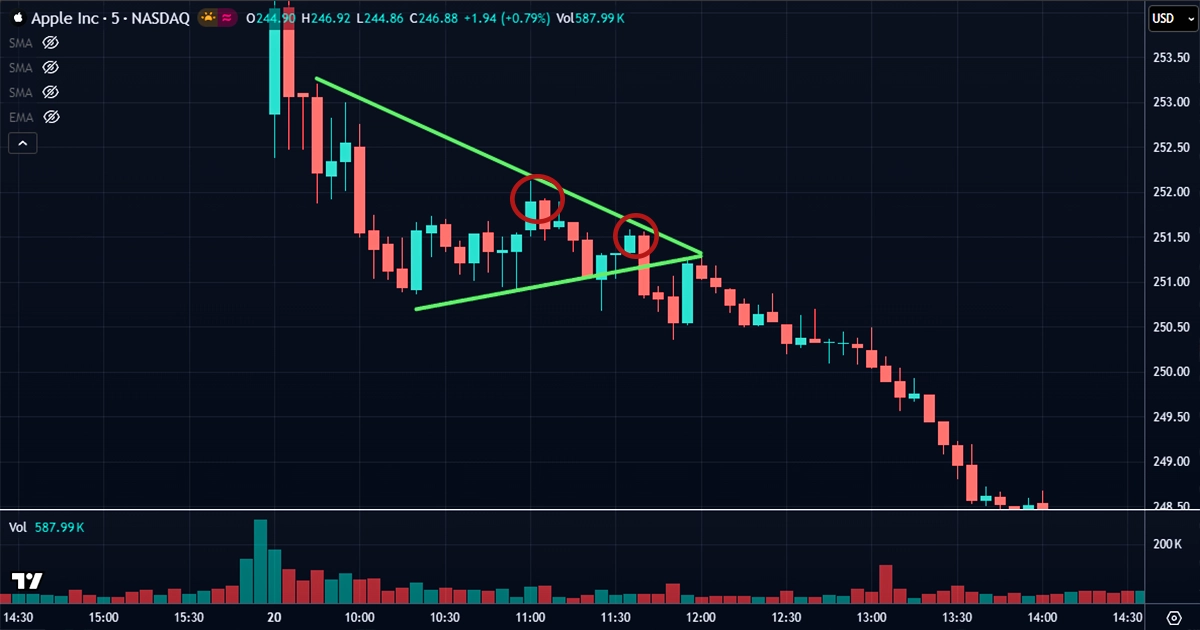
For day trading, candlestick charts are the gold standard. Each candlestick represents what the price of the security did within that particular time frame. If you are using 5 minute charts, each candlestick represents what price did in that 5 minute frame of time. They show:
Open
High
Low
Close

This gives you instant insight into momentum and market psychology.
📌 Pro tip: Avoid line charts for day trading—they hide too much information.
Timeframes That Actually Work for Day Trading
A big mistake beginners make when Setting Up Stock Charts is using only one timeframe. You need multiple timeframes to see the full picture. The lower the time frame, the faster your analysis will have to be and the faster your trades will play out.
Here’s a simple, effective setup:
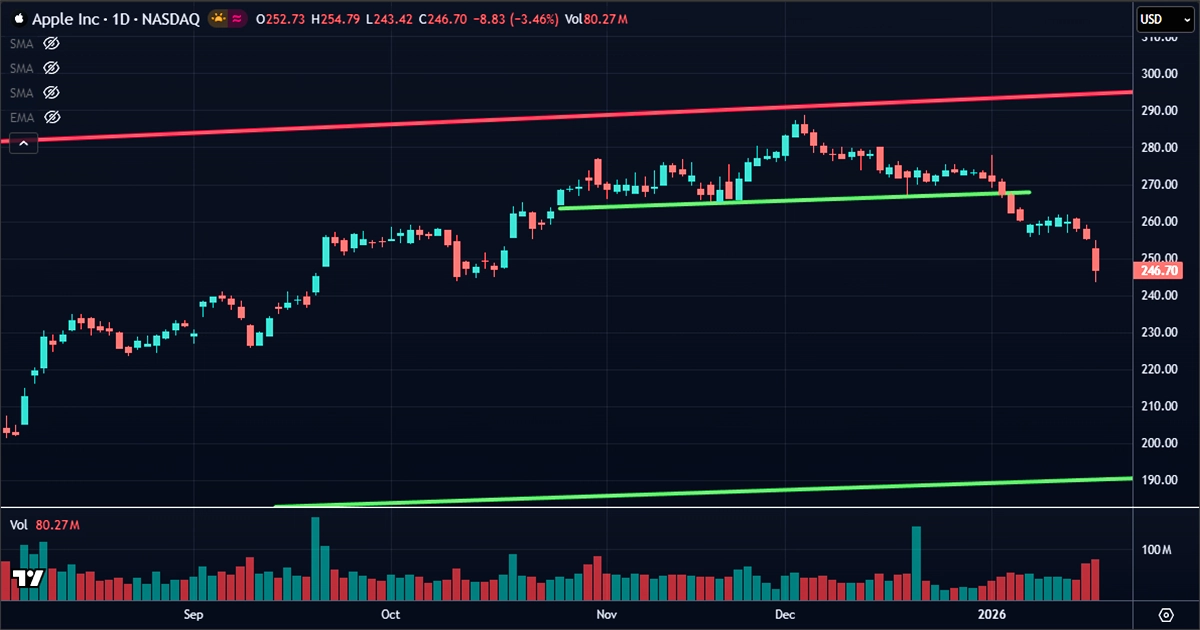
Daily Chart: Overall trend & key levels
5-Minute Chart: Primary trading timeframe
1-Minute Chart: Precise entries
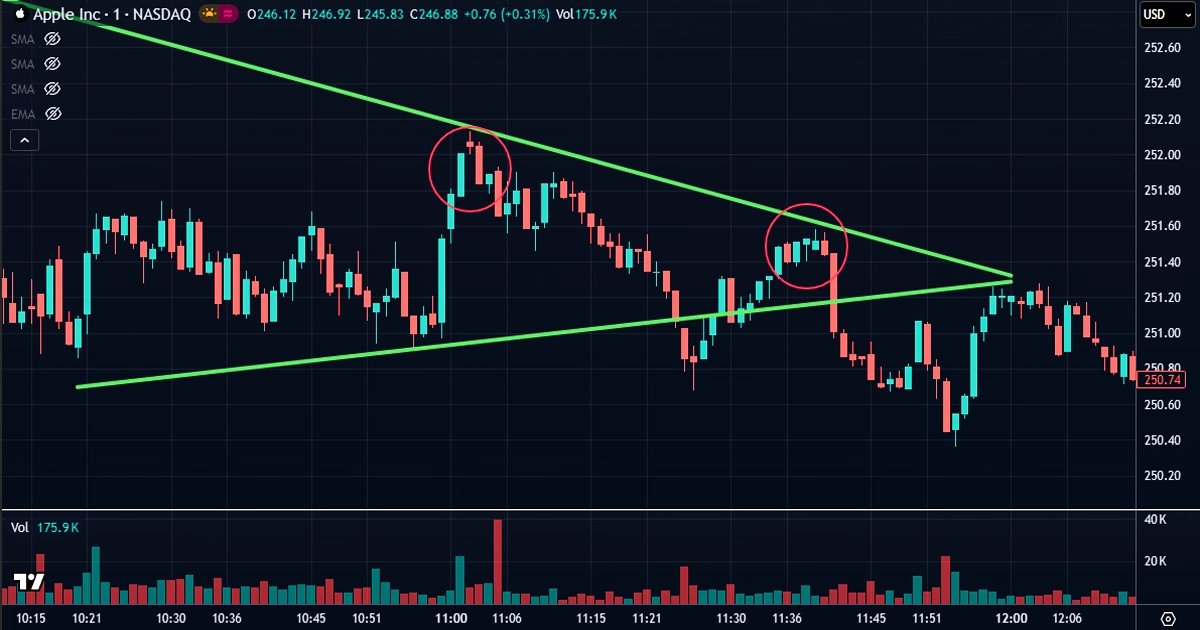
This top-down approach keeps you trading with the trend instead of fighting it.
👉 How to Choose the Best Timeframes for Day Trading
First let's set up our daily chart
We want a clean daily chart that allows us to analyze price action quickly. The daily chart helps us identify trends, support and resistance levels, overbought/oversold securities, and trading volume.
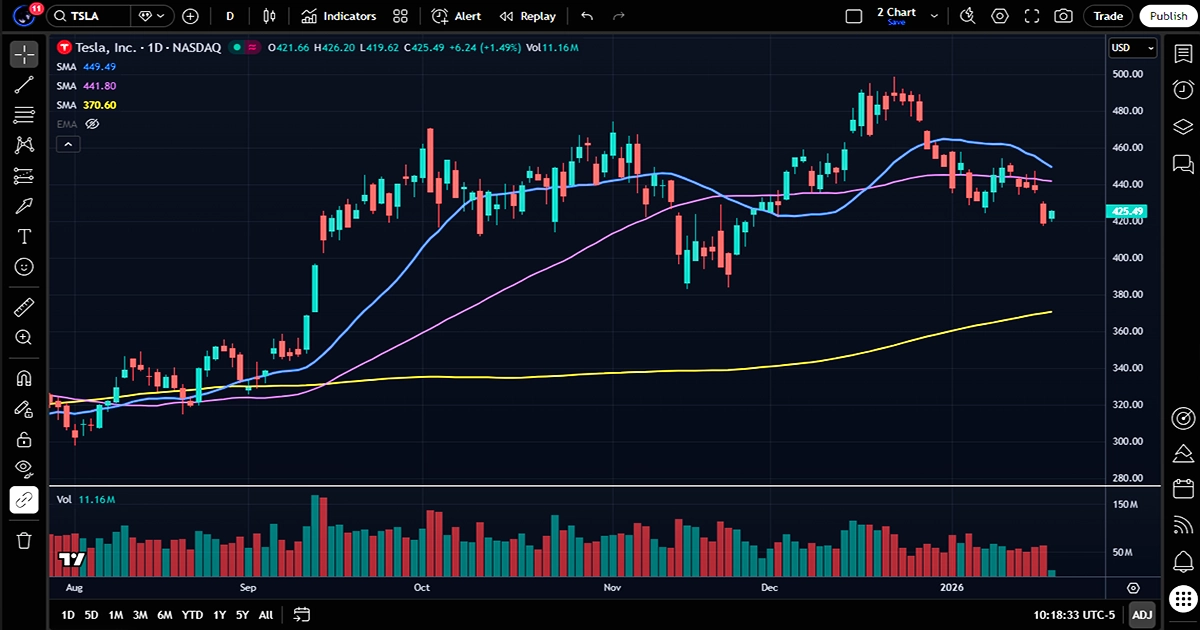
Moving Averages to identify trends
The most important:
20 SMA (Simple Moving Average) - Identifies the short term trend
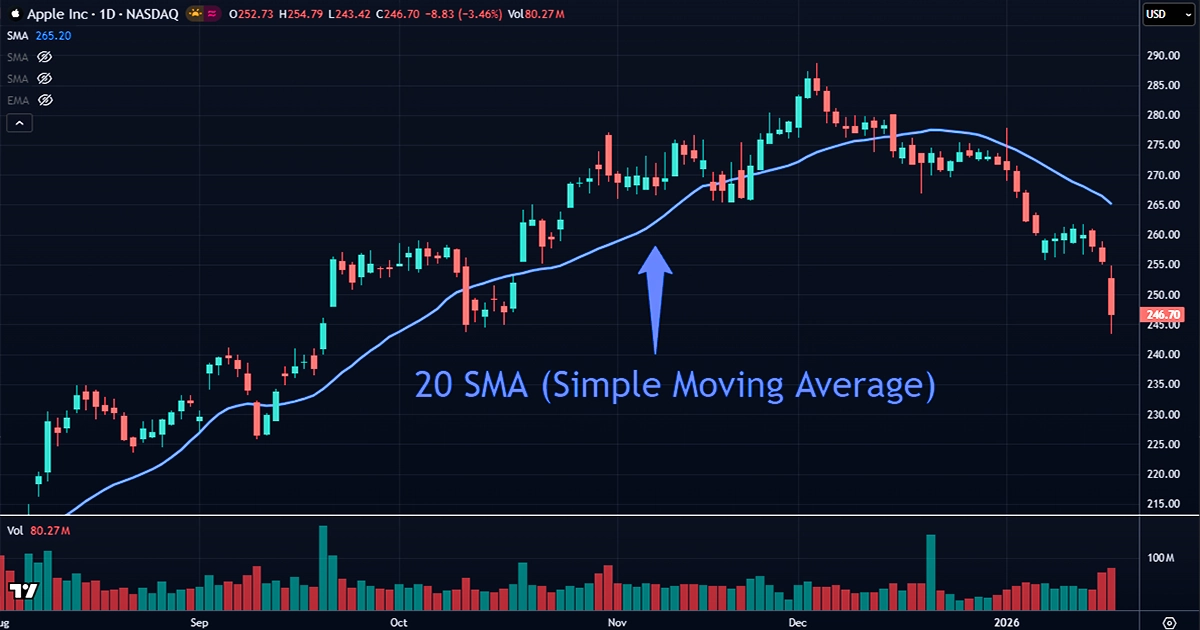
50 SMA (Simple Moving Average) - Identifies the intermediate trend

200 SMA (Simple Moving Average) - Identifies the long term trend

Volume - Identifies the amount of shares being traded. Ensures liquidity

Next, we'll set up our intraday charts. These are the charts we will use to identify our entries into trades using lower time frames.
Indicators to Use (and Which Ones to Avoid)
When it comes to Setting Up Stock Charts, less is more.
Indicators That Add Real Value
Stick with these proven tools:
VWAP – Shows institutional price levels

9 EMA (Exponential Moving Average) – Helps spot momentum and identify the immediate trend

20 EMA( Exponential Moving Average) - Helps identify the intermediate trend
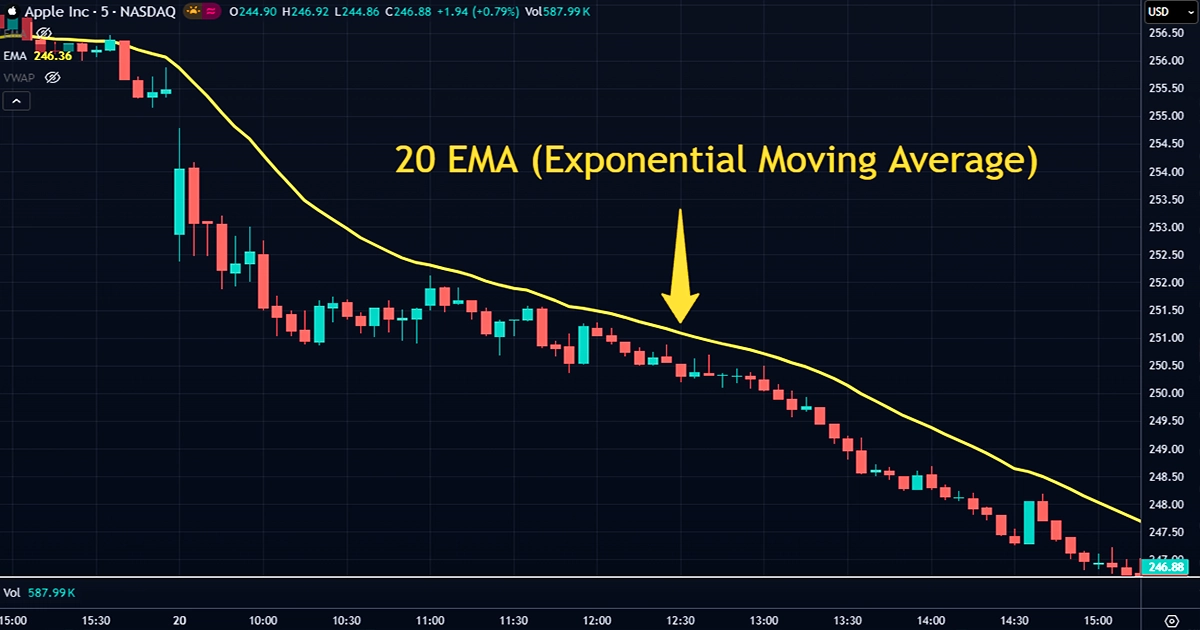
Volume – Confirms strength behind price moves

That’s it. Seriously.
Indicators to Avoid
RSI overload
MACD + Stochastic combos
Anything that lags heavily
Indicators should confirm price, not replace it.
Here's what your chart setup should look like once complete:

👉 Best Day Trading Indicators for Beginners
How to Mark Key Levels When Setting Up Stock Charts
Support and resistance levels are non-negotiable when Setting Up Stock Charts.
Focus on:
Pre-market high & low
Previous day’s high & low
VWAP
Whole and half dollar levels
Draw horizontal lines—keep them clean and obvious. These levels often act like magnets for price.
👉 Investopedia’s guide to support and resistance
Color Schemes That Improve Focus (Yes, This Matters)
It might sound minor, but your chart colors affect your performance.
Recommended setup:
Dark background (black or dark gray)
Green candles = bullish
Red candles = bearish
Light, subtle grid lines
When Setting Up Stock Charts, aim for eye comfort and clarity, especially if you’re staring at screens for hours.
How to Set Alerts and Avoid Staring at Screens All Day
Alerts are a secret weapon when Setting Up Stock Charts.
Most trading platforms will let you set a text, email, or sound notification alert when a stock approaches or hits a specific price, moving average, indicator, etc.
Set alerts for:
Breaks of key levels
VWAP cross
Pre-market highs/lows
This lets you stay focused and reduces emotional overtrading because it allows you to continue to analyze other charts instead of getting FOMO while you wait for your trade to play out.
👉 How to Set Trading Alerts Like a Pro
Platform Settings for Speed and Mobile Optimization
Your chart setup isn’t just visual—it’s technical too.
To keep page speed under 3 seconds and ensure mobile-friendliness:
Limit indicators
Disable unnecessary animations
Use cloud-based platforms like Tc2000 or the desktop app
👉 Click the link below to see my #1 recommended trading platform and scanner
Tc2000 Trading Software and Scanner
Fast charts = faster decisions.
Common Mistakes Traders Make When Setting Up Stock Charts
Let’s save you some pain.
Avoid these mistakes:
Too many indicators - Can cause Paralysis by analysis
Ignoring higher timeframes - Causes you to trade against support/resistance instead of with them
Changing setups constantly - You never truly master a setup which limits your ability to trade confidently
Copying someone else’s chart blindly - Day trading is extremely fast. It's likely you won't mimic the trade exactly, and you stand to lose money
Your goal when Setting Up Stock Charts is consistency—not perfection.
Daily Routine Checklist for Chart Setup
Before the market opens:
Locate stocks to trade
Review news catalysts
Check daily and intraday support + resistance
Mark key levels
Set alerts
Stick to your plan
This routine keeps emotions in check and execution sharp.
👉 Daily Day Trading Routine That Works
Key Takeaways: Setting Up Stock Charts the Right Way
Let’s recap:
Clean charts beat cluttered charts
Candlesticks + multiple timeframes are essential
VWAP, EMAs, and volume are enough
Mark key levels every day
Optimize charts for speed and mobile use
Mastering Setting Up Stock Charts won’t make you rich overnight—but it will give you a serious edge.
Ready to Take Your Trading to the Next Level?
If you want help Setting Up Stock Charts the right way—or learning how professional traders read the market—we’ve got you covered.
📞 Contact us at (832) 429-5282
🌐 Visit us at WallStreetSicarios.com
📧 Email us at [email protected]
Let’s turn confusion into clarity—and charts into confidence.


